
The Massachusetts Institute of Technology (MIT) stands as one of the world’s premier institutions for higher education, particularly in science, engineering, and technology. If you’re a prospective student wondering whether MIT is the right fit, or simply curious about this iconic university, you’re facing a common dilemma: choosing a school that aligns with ambitious goals in innovation and problem-solving.
MIT offers the perfect solution. Founded in 1861, it combines rigorous academics with hands-on research opportunities, fostering an environment where students tackle real-world challenges. This guide dives deep into MIT’s history, programs, campus life, and more to help you understand why it consistently ranks among the top universities globally.
A Rich History of Innovation
MIT traces its roots to the industrial revolution era. William Barton Rogers founded it in 1861 to emphasize practical education in science and engineering.
The institute quickly grew, establishing key departments like electrical engineering in 1896 and aeronautical engineering in 1914.
During World War II and beyond, MIT played pivotal roles in radar development, inertial guidance systems, and computer advancements.
In the late 20th century, it became a hub for artificial intelligence, computer science, and projects like the Human Genome Project.
Today, MIT’s motto “Mens et Manus” (Mind and Hand) reflects its commitment to blending theory with practice.
This hands-on approach has led to groundbreaking inventions, including:
- The World Wide Web (by alumnus Tim Berners-Lee)
- RSA cryptography
- Early spreadsheet software like VisiCalc
Notable Breakthroughs and Alumni
MIT’s impact extends far beyond its campus. Alumni and faculty have earned over 100 Nobel Prizes, with affiliations spanning physics, economics, and more.
Famous alumni include:
- Buzz Aldrin (Apollo 11 astronaut)
- Kofi Annan (former UN Secretary-General)
Innovations from MIT labs have birthed companies like iRobot, Intel, and Dropbox.
Research centers focus on everything from quantum computing to sustainable energy.
Academics at MIT: Rigorous and Interdisciplinary
MIT offers undergraduate and graduate programs across five schools:
- Engineering
- Science
- Architecture and Planning
- Management (Sloan)
- Humanities, Arts, and Social Sciences
With about 4,535 undergraduates and a 3:1 student-faculty ratio, classes remain intimate despite the intensity.
The academic calendar follows a 4-1-4 structure, including a January Independent Activities Period for exploration.
Popular majors include:
- Computer Science
- Mechanical Engineering
- Physics
- Mathematics
MIT encourages interdisciplinary studies, allowing students to combine fields like biology and computation.
Undergraduate Research Opportunities
Nearly all undergraduates participate in the Undergraduate Research Opportunities Program (UROP).
Students work alongside faculty on cutting-edge projects, often leading to publications or startups.
Rankings and Reputation
MIT dominates global rankings in 2025-2026.
It holds the #1 spot in QS World University Rankings for the 14th year and #2 in Times Higher Education.
U.S. News places it among the top national universities.
MIT excels in subjects like engineering, computer science, and business analytics.
These rankings reflect strong research output, employer reputation, and innovation.
Admissions: Highly Selective Process
Gaining admission to MIT is competitive. Recent acceptance rates hover around 4-5%, with thousands applying annually.
MIT practices need-blind admissions and meets full demonstrated need.
Key requirements include:
- Strong STEM preparation
- High SAT/ACT scores (when submitted)
- Compelling essays showing passion and fit
Extracurriculars demonstrating initiative, like research or entrepreneurship, stand out.
Campus Life in Cambridge
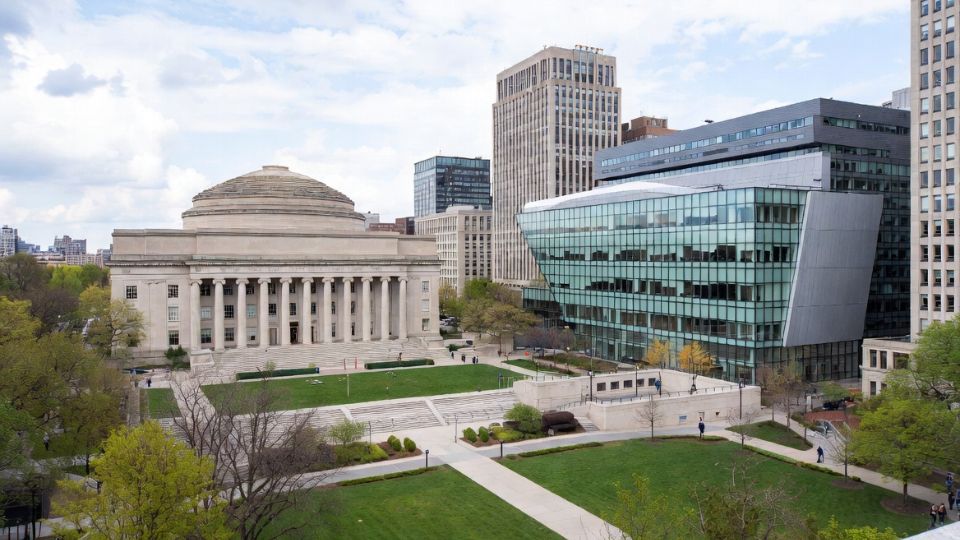
MIT’s 168-acre campus along the Charles River blends historic and modern architecture, including the iconic Great Dome.
Students live in residence halls fostering community.
Over 500 clubs cover athletics, arts, and hacking traditions.
Cambridge offers urban vibrancy, with easy access to Boston’s culture and dining.
The location near Harvard enables cross-registration.
MIT vs. Top Peers: A Comparison Table
When choosing a top-tier university, comparisons help. Here’s how MIT stacks up against Harvard and Stanford:
| Aspect | MIT | Harvard | Stanford |
|---|---|---|---|
| Primary Strength | STEM, Engineering, Research | Liberal Arts, Law, Business | Entrepreneurship, Tech, Silicon Valley Ties |
| Location | Urban Cambridge, MA (near Boston) | Urban Cambridge, MA | Suburban Palo Alto, CA |
| Undergrad Enrollment | ~4,500 | ~6,700 | ~7,800 |
| Student-Faculty Ratio | 3:1 | 7:1 | 5:1 |
| Acceptance Rate (Recent) | ~4-5% | ~3-4% | ~4% |
| Campus Vibe | Intense, collaborative, innovative | Intellectual, diverse, traditional | Entrepreneurial, relaxed, innovative |
| Notable Focus | Hands-on problem-solving | Broad humanities and sciences | Startup culture and industry links |
| Global Ranking (QS 2025-26) | #1 | #4 | #6 |
MIT excels for those passionate about technical fields and research impact.
Pros and Cons of Attending MIT
Like any institution, MIT has strengths and challenges.
Pros
- World-class education and resources — Access to top faculty and labs.
- Innovation ecosystem — Abundant research and entrepreneurship opportunities.
- Strong alumni network — Connections leading to high-impact careers.
- Collaborative culture — Peers who inspire and support growth.
- Financial aid generosity — Need-blind with full need met.
Cons
- Intense workload — Rigorous courses can lead to stress.
- Competitive environment — High-achieving peers may feel daunting.
- Limited traditional social scene — More academic focus than party-oriented campuses.
- Urban challenges — High cost of living in Cambridge/Boston.
- Weather — Cold winters in Massachusetts.
Many students thrive on the challenge, emerging resilient and skilled.
Conclusion
The Massachusetts Institute of Technology remains a powerhouse of innovation, education, and global impact.
Whether pioneering AI, addressing climate change, or launching startups, MIT equips students to lead in an ever-changing world.
Its blend of intellectual rigor, practical application, and community makes it an unparalleled choice for driven individuals.
If you’re ready to push boundaries and contribute meaningfully, MIT could be your launchpad.
FAQ
What is the acceptance rate at MIT?
Recent cycles show acceptance rates around 4-5%, making it highly selective. MIT evaluates applicants holistically, valuing passion and fit over just metrics.
What majors is MIT known for?
MIT shines in engineering, computer science, physics, and mathematics, but also offers strong programs in economics, biology, and humanities.
How much does it cost to attend MIT?
Tuition and fees exceed $60,000 annually, but MIT’s need-blind policy and generous aid ensure accessibility—many students graduate debt-free.